Connor Byrne | Berkley, Michigan
I don't take the camera out right away.
I photograph Michigan — the shoreline and the cottage country up north, the suburbs I've spent my working life in, and whatever is happening above the streets of metro Detroit.
But the part that matters happens before any of that. When I get somewhere, I walk into it first. I don't reach for the camera. I wait until I know what the place feels like, and then I start looking for the frame that holds that feeling.
Most of the time that means I come home with a handful of photographs instead of a card full of them. That's the trade I've decided to make.
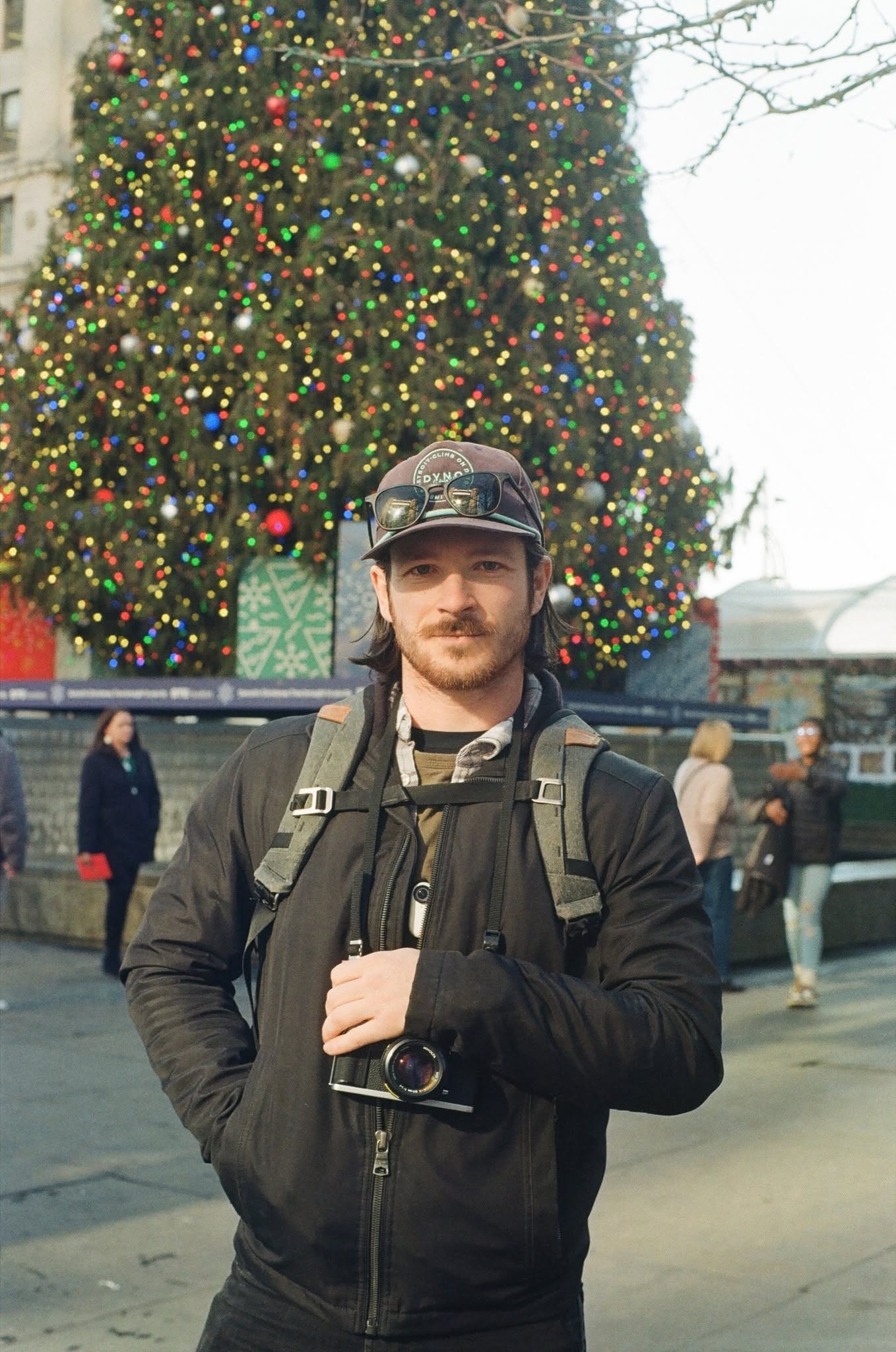
Why i still shoot film
I'd rather have one good frame than ninety-nine misses and a lucky one.
Almost everything we make now is created digitally and lives on a hard drive. I think that's exactly why physical mediums matter more than they did ten years ago — something you can actually hold, that proves a moment in time was captured on a physical thing by someone who took the patience to make the right shot at the right time.
Not because there's anything wrong with shooting digital — I shoot plenty of it — but because the discipline of film is what taught me to wait, and waiting is most of the job.
A print is the same argument, one step further. It's the photograph leaving the screen entirely.
How I got here
The first camera I bought myself was a Canon T6i, junior year of college, back in 2016. It taught me the mechanics.
What actually turned me into a photographer was my grandfather's Canon AE-1. A film camera, older than I am, and the first thing that made me slow down enough to think about a photograph before taking it.
The moment it clicked was a set of frames I made on Grand Lake. Looking at them afterward, I could see that I hadn't just captured what was happening in front of me — I'd captured why it was happening, and where. Not the look of the place. The feeling of being in it. That's the distinction I've been chasing ever since.
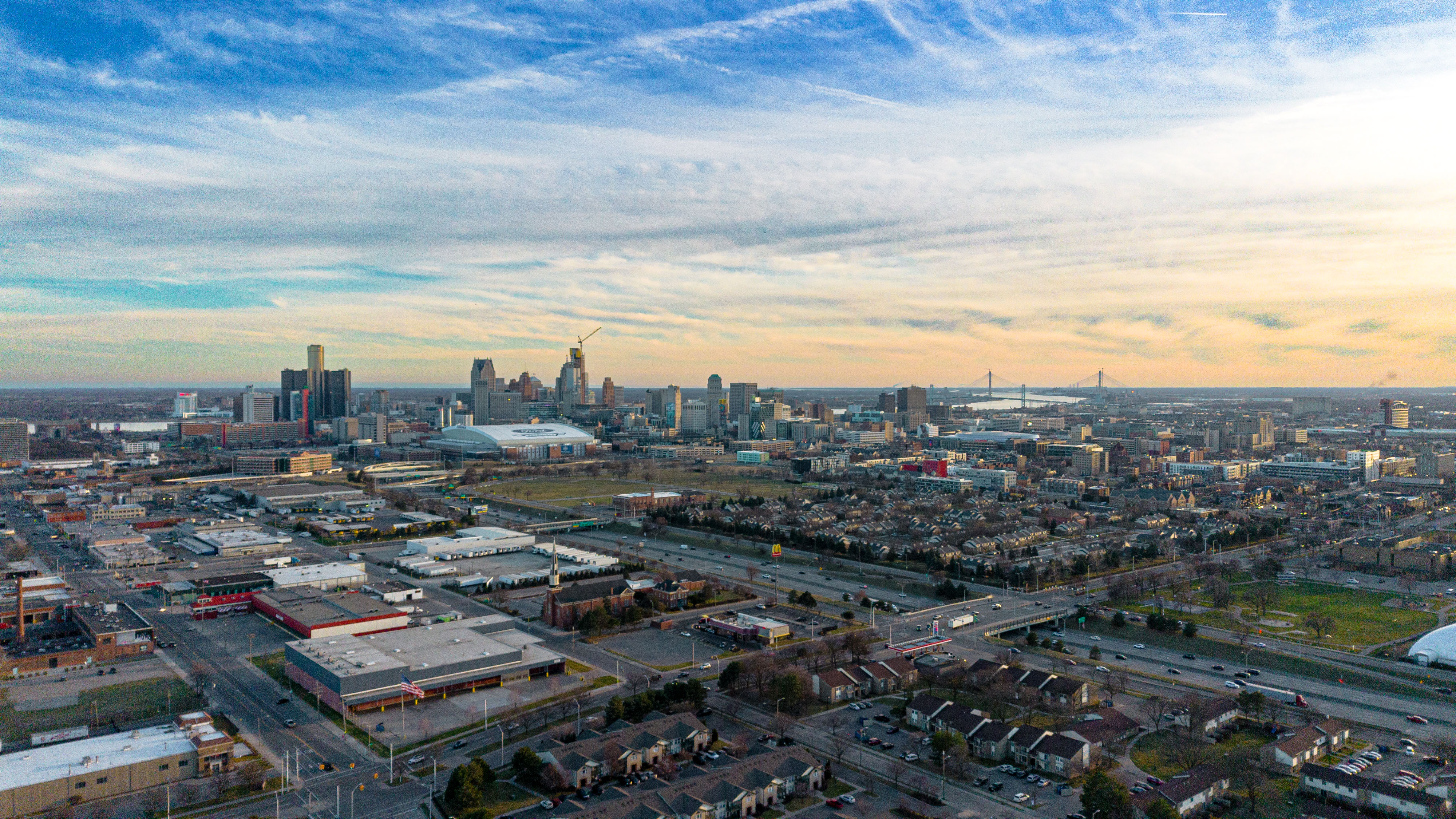
why i fly
I got a drone when I was twenty-seven and started walking and driving around metro Detroit with it.
In a city you're always stuck at ground level. You see the same intersections from the same four feet off the pavement your whole life. Getting above that and seeing what was happening over our heads — the shapes streets make, the things you drive past a thousand times without ever actually seeing — was the most inspiring thing that had happened to my photography in years.
It's the same instinct as the film work, pointed upward. Wait, look properly, and find the thing that was there the whole time.
what I'm looking for
I've spent more time shooting in Birmingham than anywhere else, mostly because it's where I worked. I'd bring a camera and walk before and after the day, which is the best possible way to learn a place.
But I don't chase specific spots. What I'm after is a set of feelings that show up everywhere:
- People taking a break from their work, or from their normal lives
- The quiet moment where someone separates themselves from the group.
- The landscapes people try to take on their phone without realizing they're capturing a color and a shape, but not the feeling of standing there — because they didn't take the time to frame it.
Those intricate moments are hard to put a finger on and harder to put into words. A lot of the time they're best spoken through a photograph. I'm the one looking out for them.
why i sell prints
Because a print is the best way to bring Michigan into your home, and the best way to feel how much beauty there is in the nature and the humanity around us.
I want a photograph on your wall to do what standing in that spot did.
To bring the city and the world into your room, and to inspire a semblance of humanity and a semblance of connection to everything outside it. That's the whole reason any of this is for sale.
What else I do
I build iOS apps, and I've made a podcast called Connor Radio for a while now. Neither has anything to do with the prints, which is why they live over here instead of in the middle of a catalogue.